A well-organized wardrobe can make a huge difference in how smoothly our daily routine runs. When everything has its place, we save time, reduce stress, and make better use of the available space. Whether we have a small closet or a large wardrobe, smart organization techniques can help us maximize storage while keeping things neat and accessible. The goal is to create a system that is practical, easy to maintain, and tailored to our lifestyle.
Start by Decluttering Your Wardrobe
Before organizing, the first step is to declutter. Over time, wardrobes tend to accumulate clothes and items we no longer use. Removing unnecessary items creates more space and makes organization easier.
We can sort clothes into categories such as keep, donate, or discard. Items that no longer fit, are rarely worn, or are damaged should be removed. This process helps us focus only on the essentials and ensures that every item in the wardrobe is useful. A decluttered wardrobe is the foundation of effective organization.
Categorize Clothing by Type
Grouping similar items together is one of the simplest ways to keep a wardrobe organized. We can categorize clothes into sections such as shirts, pants, dresses, seasonal wear, and accessories.
This system makes it easier to find what we need without searching through everything. It also helps maintain order because each category has its own designated space. Keeping similar items together creates a logical structure that simplifies daily dressing.
Use Vertical Space Efficiently
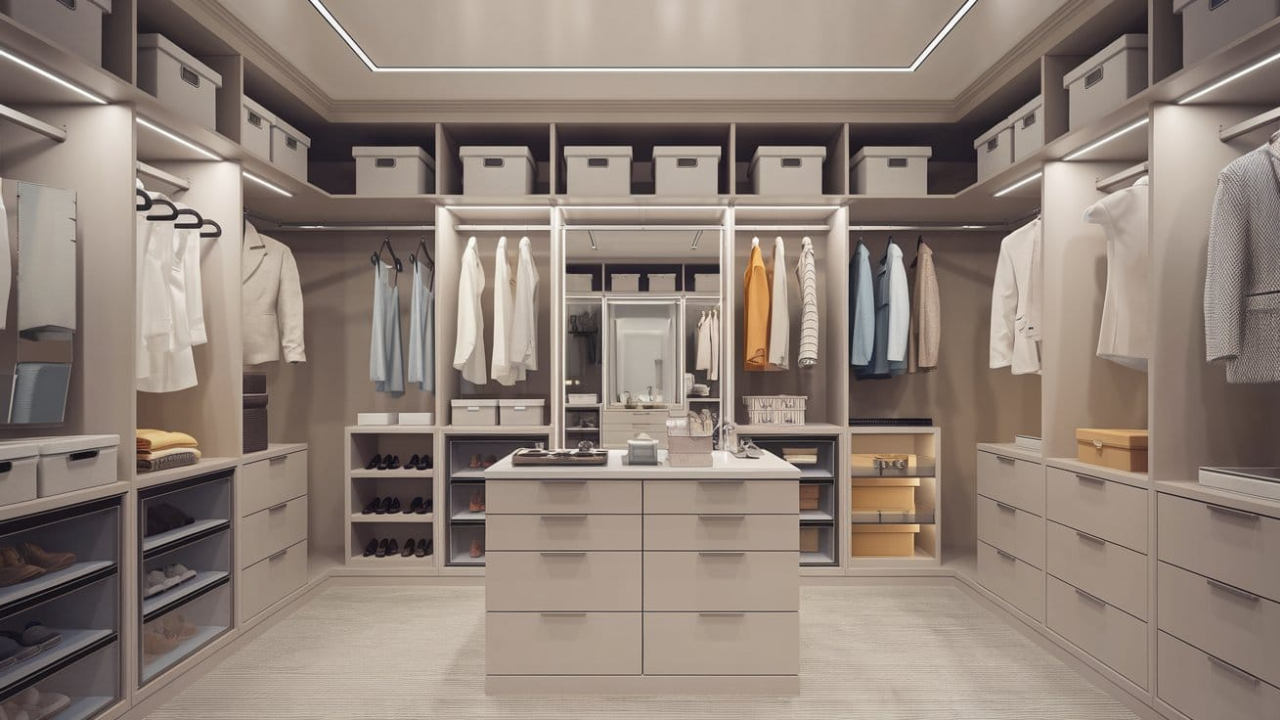
Vertical space is often underutilized in wardrobes, especially in smaller ones. We can take advantage of height by adding shelves, stackable boxes, or hanging organizers.
Long-hanging clothes can be placed on one side, while shorter items can be stored on double rods to maximize space below. Adding extra shelves above or below hanging areas allows us to store folded clothes, bags, or storage bins. Using vertical space effectively increases storage capacity without expanding the wardrobe footprint.
Install Double Hanging Rods
Double hanging rods are a great solution for increasing storage in wardrobes with limited space. By installing two rods—one above the other—we can hang more clothes in the same vertical area.
Shorter items like shirts, blouses, and skirts fit well on the top rod, while pants or folded items can go below. This setup helps organize clothes more efficiently and prevents overcrowding on a single rod. It’s a simple upgrade that significantly improves storage capacity.
Use Drawer Dividers for Small Items
Drawers can easily become messy if small items are not properly organized. Using drawer dividers helps separate items like socks, underwear, ties, and accessories into neat sections.
We can use adjustable dividers or small storage boxes inside drawers to keep everything in place. This prevents items from mixing together and makes it easier to find what we need quickly. Organized drawers contribute to a more efficient and tidy wardrobe overall.
Add Storage Boxes and Baskets
Storage boxes and baskets are useful for keeping items organized and out of sight. They are especially helpful for storing seasonal clothing, accessories, or items that are not used daily.
We can label boxes to identify their contents easily. Stackable containers are ideal for maximizing shelf space while maintaining order. Using uniform boxes also creates a clean and visually appealing look inside the wardrobe.
Optimize Shoe Storage
Shoes can take up a lot of space if not stored properly. Dedicated shoe racks, shelves, or hanging organizers can help keep footwear organized and accessible.
We should arrange shoes by type or frequency of use. Frequently worn shoes can be placed at eye level, while occasional or seasonal shoes can be stored in boxes or upper shelves. Keeping shoes organized not only saves space but also protects them from damage.
Utilize Hanging Organizers and Hooks
Hanging organizers and hooks are excellent for storing accessories and small items. These can be attached inside wardrobe doors or on side panels.
We can use them to store belts, scarves, ties, bags, or jewelry. Hanging organizers make use of otherwise unused space and keep accessories neatly arranged. This improves accessibility and reduces clutter inside drawers and shelves.
Store Seasonal Clothing Separately
Seasonal rotation is an effective way to manage wardrobe space. Clothes that are not currently in use can be stored separately to free up room for daily wear.
For example, winter clothes can be stored in storage bins during summer, and vice versa. Keeping only relevant items in the main wardrobe helps maintain organization and prevents overcrowding. This approach also makes it easier to access the clothes we actually need.
Keep Frequently Used Items at Eye Level
Items that we use daily should be placed in the most accessible areas of the wardrobe. Eye-level shelves or hanging sections are ideal for frequently worn clothes.
Placing essential items in easy-to-reach spots reduces time spent searching and improves efficiency. Less frequently used items can be stored higher or lower in the wardrobe. This simple arrangement helps create a practical and user-friendly system.
Maintain a Consistent Folding and Hanging System
Consistency is key to maintaining an organized wardrobe. Folding clothes in a uniform way and hanging them properly helps keep everything neat and visually aligned.
We can use similar folding techniques for all similar items and ensure that hangers are aligned in the same direction. This not only improves appearance but also makes it easier to manage clothes over time. A consistent system reduces clutter and keeps the wardrobe organized for longer periods.
Regularly Reorganize and Maintain
Wardrobe organization is not a one-time task—it requires regular maintenance. Over time, clothes may get misplaced or new items may be added, so periodic reorganization is necessary.
We should take time every few weeks or months to reassess the wardrobe, remove unused items, and reorganize sections if needed. Regular maintenance ensures that the system remains functional and clutter-free in the long run.
Conclusion
Smart wardrobe organization is all about maximizing space while keeping things simple and accessible. By decluttering, categorizing items, using vertical space, and incorporating storage solutions like drawers, boxes, and organizers, we can create a wardrobe that is both efficient and easy to use. A well-organized wardrobe not only saves time but also improves daily routines and reduces stress. With consistent effort and smart planning, even a small wardrobe can be transformed into a highly functional and neatly arranged space.